What Should Education Really Prepare Learners for in the Age of AI?

by BrainStream Chief Operating Officer Tzu-Ying (Kimberley) Chen
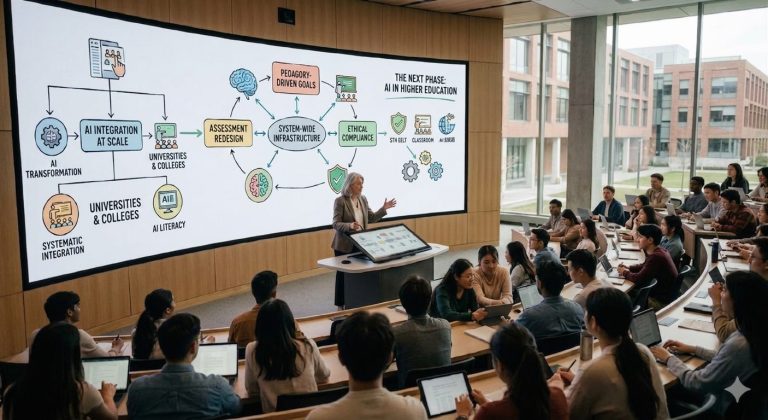
Artificial intelligence is transforming the way people learn, work, and create. At the same time, the conversation around AI in education is entering a new stage.
Not long ago, the primary debate centered on whether students should be allowed to use AI and whether it might compromise learning. Today, the discussion is becoming more constructive: How can AI be integrated into education in ways that are both responsible and aligned with educational values?
This shift signals an important change. The question is no longer simply whether AI belongs in education, but how educators can help learners use it with confidence, responsibility, and sound judgement.
One of the clearest outcomes of this evolution is the growing importance of AI literacy. Yet AI literacy extends far beyond learning how to write effective prompts or navigate AI tools. It includes understanding what AI can and cannot do, evaluating the reliability of AI-generated information, recognizing bias, and applying AI ethically in different contexts.
Ultimately education is not aiming to develop students who simply know how to use AI. It seeks to cultivate learners who understand when to rely on AI, when to question it, and when independent thinking matters most.
This evolution is also reshaping the role of educators.
Rather than replacing teachers, AI is increasingly viewed as a tool that can reduce administrative workload, support differentiated instruction, generate learning resources, and provide timely feedback. Yet the most meaningful aspects of education—cultivating curiosity, building trust, mentoring learners, and developing ethical judgement—remain deeply human. Technology can enhance teaching, but it cannot replace the relationships at the heart of learning.
Assessment is evolving as well. As generative AI makes information and content more accessible than ever, educational institutions are placing greater emphasis on capabilities such as critical thinking, problem solving, communication, creativity, and effective human-AI collaboration. Increasingly, learning is measured not only by the answers students produce, but by how they reason, evaluate evidence, and make informed decisions.
Perhaps the more important conversation, however is not about AI itself, but about the purpose of education.
Education has never been about teaching students how to use today’s tools. Its enduring purpose is to help learners develop the ability to adapt, think independently, and make responsible decisions—regardless of what technologies emerge next.
From printed textbooks to the internet, from search engines to generative AI, technology will continue to evolve. The learners who thrive will not necessarily be those who master every new tool first, but those who possess the curiosity, resilience, and judgement to keep learning throughout their lives.
For education technology providers, this presents both an opportunity and a responsibility. Success should not be measured solely by building more capable AI systems, but by designing learning experiences that strengthen human potential. AI should serve as a catalyst for deeper thinking, creativity, and meaningful learning not as a shortcut that replaces them.
The future competitiveness of education will not be defined by whether students use AI. It will be defined by whether they develop the capacity to think critically, learn continuously, and create value in an AI-enabled world. When AI becomes a partner in learning rather than the destination itself, education can fulfill its most enduring mission: empowering people not only to adapt to the future, but to shape it.