When the Tutor Does the Homework

by BrainStream CEO Steve Alcorn
OpenAI launched ChatGPT for Teens this week. The pitch is learning: Study Mode asks guiding questions, walks students through problems step by step, and nudges them away from shortcuts. For the first few exchanges, it’s a tutor Socrates would recognize.
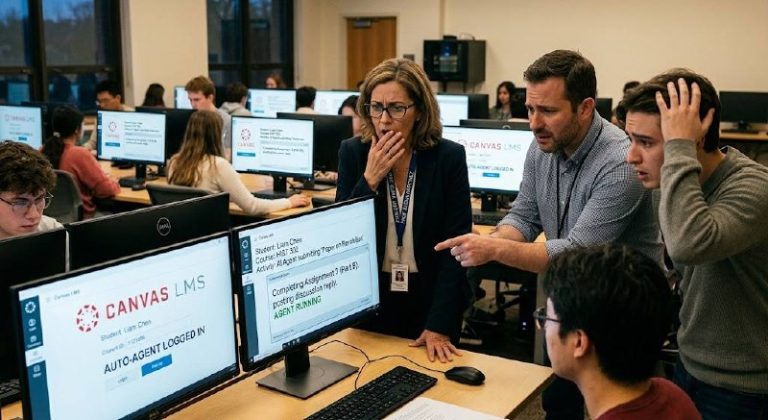
Then the student pushes. “Just give me the outline.” “Turn that into a paragraph.” And the Socratic posture dissolves. The essay gets outlined. The essay gets written. The student watches it happen, the way you’d watch someone else assemble your bookshelf.
I’ve taught for 25 years. Students under deadline pressure push every tutor toward doing the work for them. Human tutors resist, because their job is the student. A chatbot’s job is keeping the user happy. Only one of those jobs survives a Sunday-night deadline.
There’s a deeper problem. The chatbot doesn’t know the material. Its knowledge is the whole internet, and your textbook is one drop in it. Its questions can’t come from Chapter 7, because it was never assigned Chapter 7. In a chat window, the material is optional. The finished product can exist without it. And when the material is optional, so is the learning.
This is the problem BrainStream was built to solve. We start from the opposite end: the actual book. Every question in BrainStream comes from the material itself. Students dive into the text at any point, test themselves on any topic whenever they like, and get feedback tied to the content they’re actually responsible for. The system adapts around what they’ve demonstrated — which it can only know by asking, and it can only ask about the material.
Engagement in a chat tutor is a mode. It lasts until the user opts out. Engagement in BrainStream is the mechanism. There’s no chat window to coax an essay out of. You move forward by answering questions about the assigned content, and every step of that progress is visible to the student, the teacher, and the parent. A student can’t slide through BrainStream without meeting the material. That guarantee is structural, not behavioral.
To be fair, OpenAI’s instincts are half right. Guiding questions are right. Step-by-step is right. Homework nudges are right. But a tutor that ends up writing the essay has confused two different jobs, and the student is the one who pays for it — usually right around exam time, when it turns out the tutor did all the learning.
The measure of a learning tool isn’t how well it answers. It’s what the student can do without it afterward.