

AI Is Moving Education Into Its Next System-Level Phase

by BrainStream Chief Marketing Officer Ya-Hui (Laura) Kao
Recent developments in the UK and across Europe point to a clear shift: AI is no longer just a learning tool, it is becoming part of the education system itself.
In the UK, the government is working with EdTech and AI companies to pilot “AI tutoring tools” aimed at supporting personalized learning at scale, particularly for disadvantaged students.
At the same time, countries like Estonia are integrating controlled access to tools like ChatGPT into high school education, allowing students to use AI within a structured learning environment rather than restricting it entirely.
https://www.wsj.com/tech/ai/estonia-is-fighting-brain-rotwith-free-chatgpt-8bc2806d
The shift is not about tools, but about systems
Across these initiatives, the direction is consistent. AI is no longer positioned as something that simply supports learning. It is increasingly involved in how learning itself is designed.
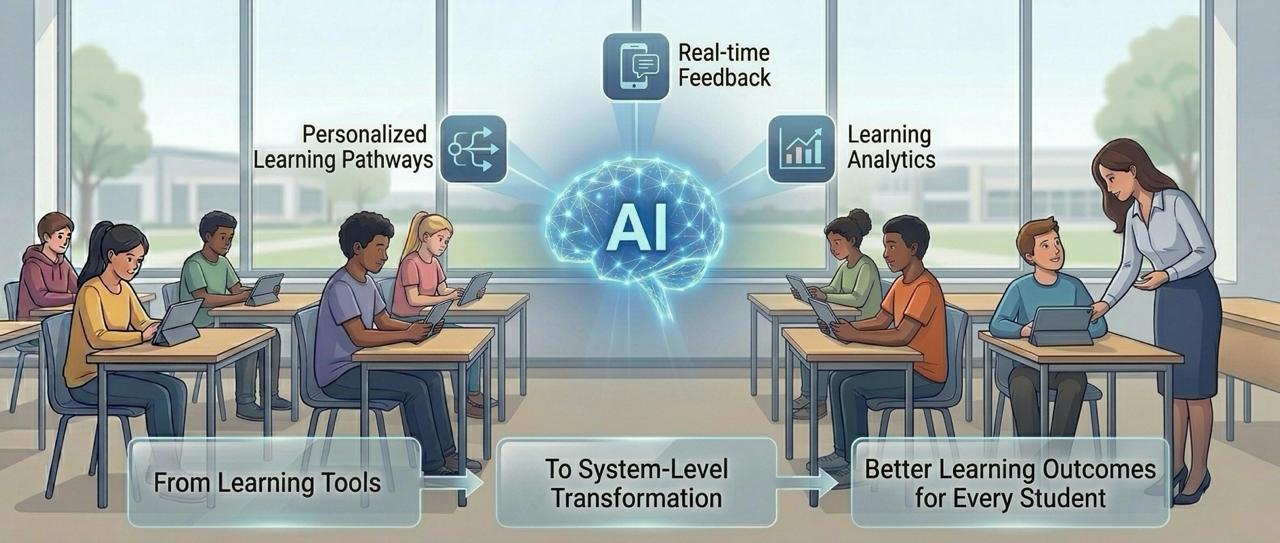
EdTech is moving away from competing on content and features, and toward system-level redesign, including learning pathways, real-time feedback, and education-wide intelligence layers.
CMO perspective
The key shift in AI for education is not model capability, but structural influence on how teaching is organized.
As AI becomes embedded into classrooms and policy frameworks, it stops being just a productivity tool and starts becoming part of the learning architecture itself.
The real inflection point is moving from using AI to learn, to learning inside AI-enabled systems.


