AI in Early Childhood Education: Perspectives on Opportunity and Design

by BrainStream Chief Operating Officer Tzu-Ying (Kimberley) Chen
As artificial intelligence continues to influence the broader educational landscape, its application within early childhood learning remains a subject of significant interest and careful consideration. The early years are a unique developmental period, focused on building the foundational cognitive and social-emotional skills that support lifelong learning.
Introducing AI into this space is not about replacing established pedagogical methods, but about exploring where technology can provide meaningful support to the existing ecosystem of educators and families.
1. Adaptive Environments and Individual Paces
One of the primary challenges in early education is the diversity of learning speeds and styles. Traditional environments often find it difficult to provide highly individualized attention at scale.
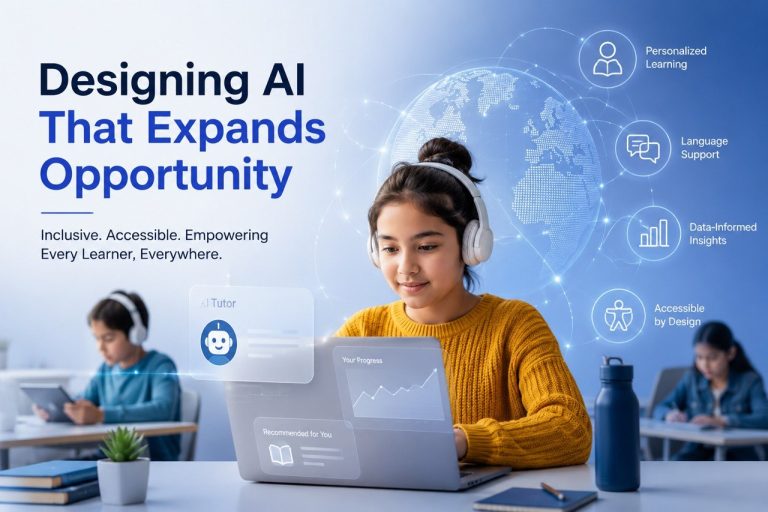
AI offers a potential solution through responsive learning pathways. By analyzing how a child interacts with digital tools—identifying where they show confidence and where they face friction—systems can adjust content in real-time. This allows for a more personalized experience, ensuring that the level of challenge remains aligned with the child’s current developmental stage.
2. Supporting the Role of Educators and Caregivers
In early childhood, human interaction is the cornerstone of development. Technology is most effective when it functions as a supportive layer rather than a primary focus.
Insightful Observations: Digital tools can help surface learning patterns and developmental milestones, providing educators with data-driven insights without increasing their administrative workload.
Time for Connection: By streamlining routine tasks, technology can potentially free up more time for the interactions that matter most: social play, emotional guidance, and creative exploration.
3. Considerations for Developmental Science
The integration of AI must remain grounded in how young children actually learn—through movement, tactile exploration, and social collaboration.
Responsible design in this field emphasizes:
Active Engagement: Moving away from passive screen time toward interactive experiences that prompt thinking and problem-solving.
Physical Integration: Using digital tools to spark “offline” curiosity, encouraging children to explore the physical world around them.
Privacy and Ethics: Given the age of the users, maintaining rigorous data privacy and transparent practices is a fundamental requirement.
4. Broadening Educational Access
AI-driven resources have the potential to bridge gaps in educational access. By providing high-quality, multilingual, and structured learning experiences, these tools can support families and communities in regions where traditional early childhood programs may be less available.
Moving Forward
The role of AI in early childhood is still evolving. Its value lies not in the technology itself, but in how thoughtfully it is applied to support a child’s natural curiosity. A balanced approach—one that combines technical innovation with a deep respect for developmental science—will be essential as these tools continue to take shape.
#AIinEducation #EarlyChildhoodLearning #EdTech #BrainStream #PersonalizedLearning