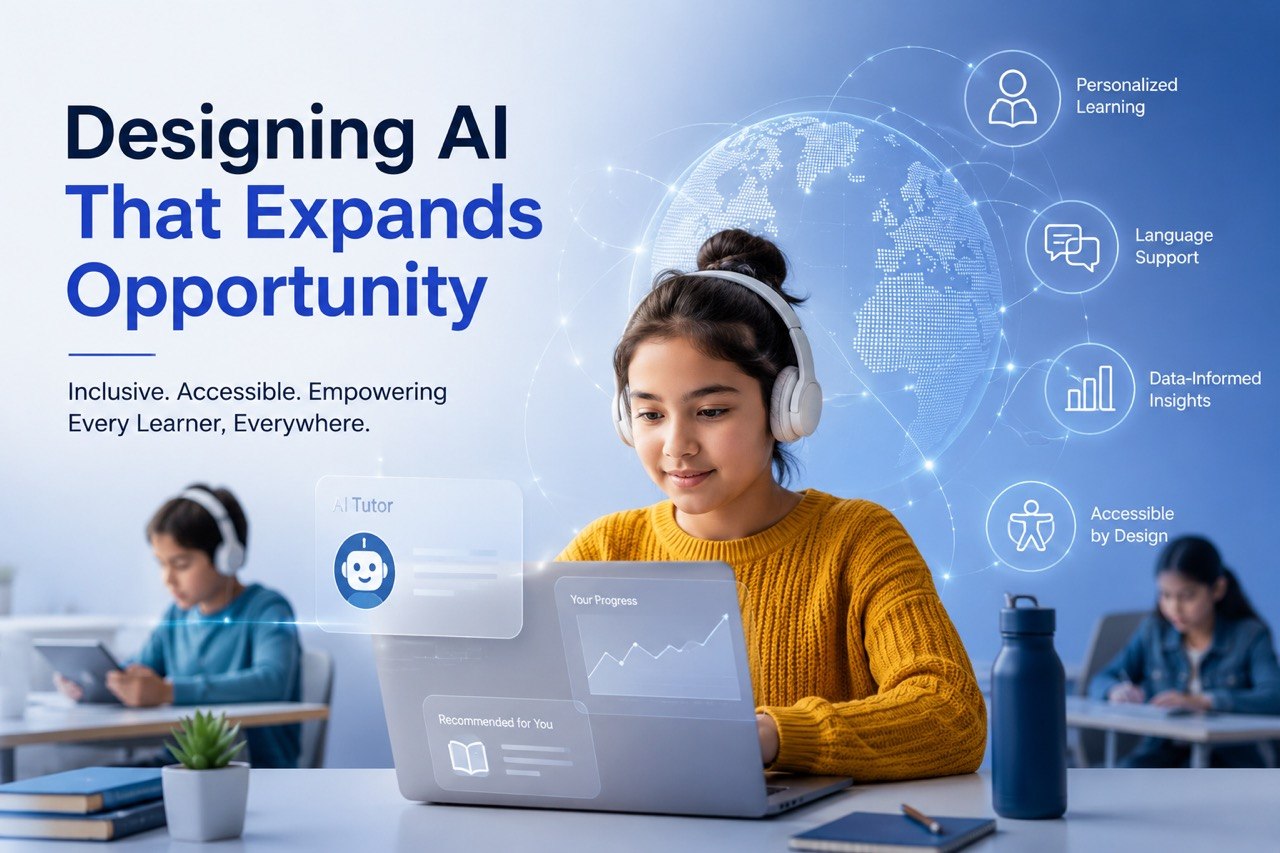
Designing AI That Expands Opportunity

by BrainStream Chief Operating Officer Tzu-Ying (Kimberley) Chen
Artificial intelligence is rapidly transforming the way people learn, access information, and develop skills. In education, AI offers the potential to create more personalized, adaptive, and accessible learning experiences at scale.
But as these technologies become more integrated into classrooms and learning environments, an important question remains:
Who benefits from this progress?
Innovation alone does not guarantee inclusion. Differences in access to technology, language, digital literacy, and educational support continue to shape how learners experience opportunity. Without intentional design, AI can unintentionally reinforce existing gaps rather than help close them.
At its best, educational AI should do more than optimize learning. It should expand access to it.
Designing AI that expands opportunity means building systems that recognize the diversity of learners and the different barriers they may face. It means prioritizing accessibility, fairness, transparency, and human-centered design from the beginning — not as secondary considerations, but as foundational principles.
The future of education will increasingly be shaped by intelligent technologies. The responsibility for the industry is not only to build systems that are more capable, but also systems that are more inclusive.
When thoughtfully developed, AI can help create learning environments that are more flexible, supportive, and widely available — giving more people the opportunity to learn, participate, and grow regardless of background or circumstance.
Technology creates lasting impact when it broadens opportunity for everyone, not only for those already positioned to succeed.