AI + Gamification: Enhancing Student Engagement in Higher Education

by BrainStream Chief Marketing Officer Laura Ya-Hui Kao
Introduction: Making Learning More Engaging
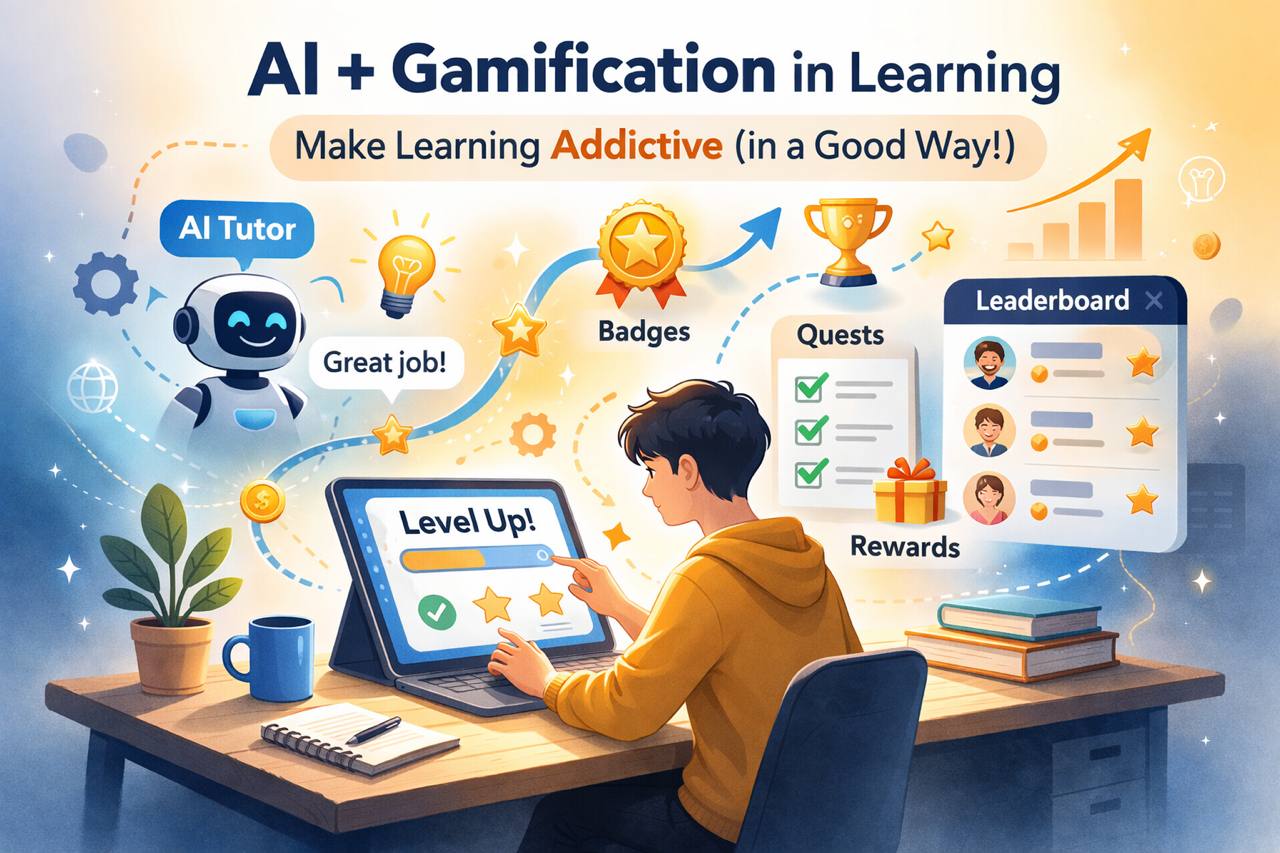
Students today are accustomed to interactive, game-like environments in daily life. Applying these principles to education—through gamification and AI-powered personalization—can transform learning into a more engaging and effective experience. By combining game elements like points, badges, leaderboards, and challenges with AI-driven adaptation, educators can foster motivation, participation, and long-term skill development.
Why Gamification Matters
Gamification is not just “making learning fun.” Recent research shows that well-designed gamified elements increase motivation, engagement, and interaction in university courses. Features such as badges, progress tracking, challenges, and feedback loops are consistently linked to improved learning experiences across disciplines.
🔗 Springer (2026): Gamification and educational technology synergy in higher education
AI Enhancing Gamified Learning
AI provides critical support for gamified learning by:
- Personalizing learning paths according to student performance
- Providing real-time feedback for immediate correction
- Adjusting challenges dynamically to match skill levels
Integrating AI with gamification not only increases engagement but also helps develop soft skills like critical thinking, collaboration, and problem-solving.
🔗 DOAJ (2025): Integrating AI and gamification in higher education
Practical Applications
Examples of AI-enhanced gamified learning include:
- Adaptive quizzes adjusting difficulty based on student answers
- Intelligent tutoring systems giving personalized hints and rewards
- E-learning platforms recommending modules to strengthen weak skills
These approaches augment teaching rather than replace it, enabling students to engage actively with content and track their own growth.
Designing Effective Learning Experiences
To ensure gamification is meaningful:
- Align game mechanics with learning objectives (badges should reflect true mastery)
- Use AI to provide actionable, personalized feedback
- Encourage reflective engagement to deepen understanding
- Promote both collaboration and healthy competition
When implemented properly, gamification motivates students intrinsically—they participate not just for rewards, but because they see progress and value in learning.
Conclusion
AI combined with gamification is more than a trend—it’s a strategy for adaptive, interactive, and meaningful learning. Universities that integrate these approaches can help students stay motivated, master complex topics, and develop skills applicable to future careers.
#AI #EdTech #Gamification #HigherEducation #BrainStream