The Paradox of Productivity: What the Latest Data Means for the Future of EdTech

by BrainStream Chief Financial Officer Phyllis Chia-Hua Chen
Working at the intersection of AI and education, I spend a lot of time looking at growth curves. But the latest 2025 data from KPMG Canada presents a trend that should give every educator, parent, and tech leader pause.
The adoption of Generative AI (GenAI) among Canadian students has hit a tipping point, skyrocketing from 52% in 2023 to 73% today. While this represents a massive shift in how we work, the qualitative data reveals a significant “Value Paradox” that our industry must address.
The Stats That Matter
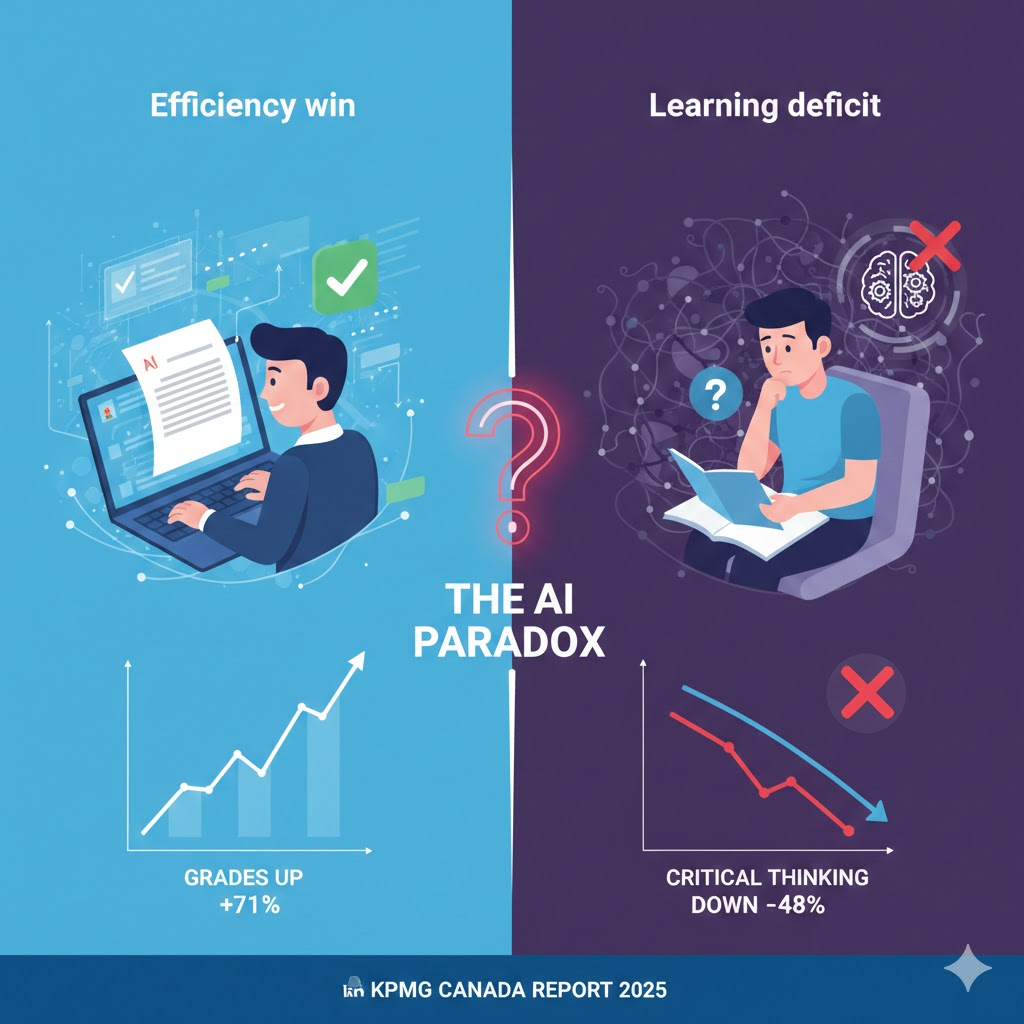
The Efficiency Win: 71% of students report that AI has improved their grades.
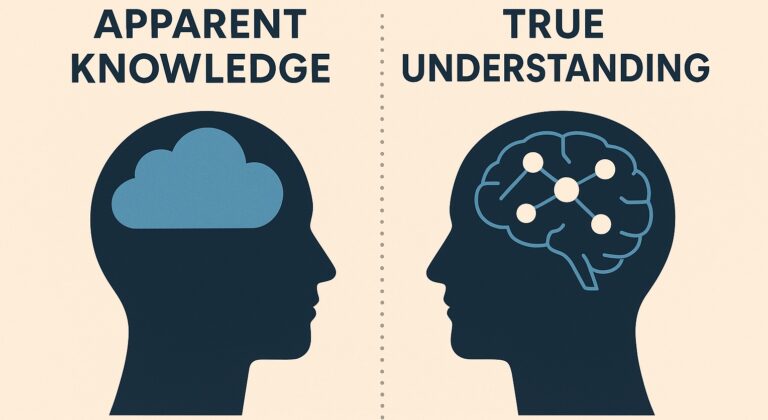
The Learning Deficit: Paradoxically, 66% of those same students admit they feel they are learning less, and nearly half (48%) worry about the erosion of their critical thinking skills.
Moving Beyond “Ghostwriting”
From a strategic perspective, the first wave of AI Education was built on efficiency tools—summarizers and draft generators. While these products scaled quickly, KPMG’s report suggests they may be hitting a “utility ceiling.”
If students feel they are passing their courses while losing their ability to think, the long-term value of both higher education and “homework-helper” AI apps will eventually diminish. I believe there is a massive opportunity for a “Second Wave” of EdTech: tools that prioritize cognitive scaffolding over automated output.
The Pivot to Sustainable Learning
At our company, we are tracking three key shifts:
From Output to Process: Shifting focus from “generating the answer” to “explaining the logic.”
AI Literacy as a Moat: Schools are hungry for tools that integrate ethics and verification directly into the workflow.
Human-Centric ROI: The most valuable AI tools won’t replace the teacher; they will automate administrative friction so that high-value, human mentorship can return to the center of the student experience.
The “Gold Rush” phase of AI in the classroom is maturing. The next chapter belongs to those who can prove that AI makes students smarter, not just faster.
I’m curious to hear from everyone: How do you see us balancing the demand for speed with the necessity of deep, critical learning in an AI-driven world?
🔗 Read the full KPMG report here: KPMG Canada – Generative AI Boom Among Canadian Students
#EdTech #GenerativeAI #HigherEducation #BrainStream